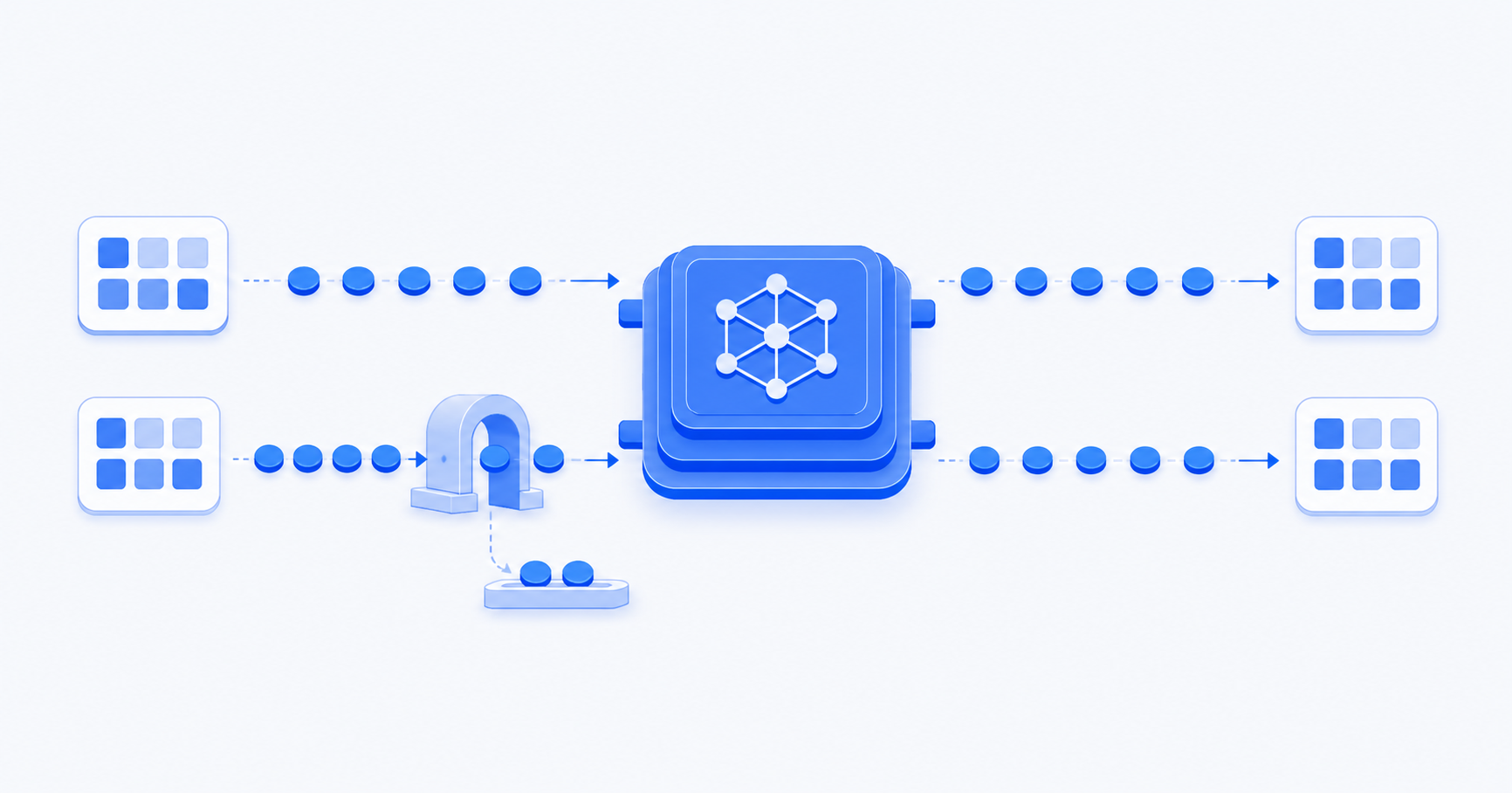
We have upgraded the OpenAI compatible interface with deeper optimizations specifically for the Claude series models. You can now control thinking and caching more precisely and conveniently. Interleaved thinking in multi-turn conversations is now more user-friendly, allowing seamless integration without additional parameters. It also supports enabling the beta features offered by Anthropic.
1. Model Thinking (Extended Thinking)
1.1 Advantages of Interleaved Thinking
When interleaved thinking is not enabled, the model performs thinking only once at the beginning of an assistant turn; subsequent responses are generated directly after receiving tool results, without producing new thinking blocks:
User → [Thinking] → Tool Call → Tool Result → Response
When interleaved thinking is enabled, the model inserts a new thinking block each time it receives a tool result, forming a chain of reasoning:
User → [Thinking] → Tool Call → Tool Result → [Thinking] → Response
                                                ↑ Interleaved Thinking
This enables the model to:
- Perform secondary reasoning based on tool results, rather than simply concatenating outputs.
- Chain reasoning between multiple tool calls, where each decision is based on the analysis of the previous step.
Reference: Anthropic Interleaved Thinking
1.2 Enabling Thinking
You can enable thinking in four ways, choosing any one of them:
| Method | Example | Description |
|---|---|---|
reasoning_effort |
"reasoning_effort": "low" |
OpenAI standard parameter, placed at the top level of the request body |
reasoning.effort |
"reasoning": {"effort": "low"} |
Equivalent to the previous method, placed within the reasoning object |
reasoning.max_tokens |
"reasoning": {"max_tokens": 1024} |
Precisely controls the maximum number of tokens for thinking |
Model name with -think |
"model": "claude-sonnet-4-5-think" |
The simplest way, requires no additional parameters |
Priority (when multiple methods are used):reasoning_effort>reasoning.max_tokens>reasoning.effort>-thinksuffix
Possible values for effort: minimal / low / medium / high / xhigh
1.3 Thinking Return
The response message will include two new fields:
reasoning_content: Thinking content (string), for easy display.reasoning_details: Complete structured information about thinking, which needs to be returned as-is in multi-turn conversations; the internal structure may differ between providers.
Non-streaming example (omitting unrelated fields):
{
  "choices": [{
    "message": {
      "role": "assistant",
      "content": "Hello! How can I help you today?",
      "reasoning_content": "The user is just saying hello...",
      "reasoning_details": {
        "type": "thinking",
        "thinking": "The user is just saying hello...",
        "signature": "Er8CCkYI..."
      }
    }
  }]
}
In streaming responses, thinking content will be sent in chunks via delta.reasoning_content and delta.reasoning_details. For the complete streaming concatenation logic, refer to the full example below.
1.4 Retaining Thinking in Multi-Turn Conversations (Interleaved Thinking is built-in, no additional parameters needed)
To enable the model to continue its reasoning capabilities in multi-turn conversations, simply place the previously returned reasoning_details as-is into the next round's assistant message:
messages = [
    {"role": "user", "content": "What's the weather like in Boston?"},
    {
        "role": "assistant",
        "content": response.choices[0].message.content,
        "tool_calls": response.choices[0].message.tool_calls,
        "reasoning_details": response.choices[0].message.reasoning_details,
    },
    {
        "role": "tool",
        "tool_call_id": "toolu_xxx",
        "content": '{"temperature": 45, "condition": "rainy"}',
    }
]
AIHubMix will automatically enable interleaved thinking when it detects historical thinking information in the request, allowing the model to continue deep reasoning after receiving tool call results without requiring additional parameters.
1.5 Complete Example
The following two examples demonstrate the complete multi-turn Tool Call + interleaved thinking process: user inquiry → model thinks and calls a tool → inject tool results (preserving reasoning_details) → model interleaved thinking gives the final response.
Non-streaming · Interleaved Thinking
import os
import json
from openai import OpenAI

client = OpenAI(
    base_url="https://aihubmix.com/v1",
    api_key=os.environ.get("AIHUBMIX_API_KEY", "sk-***"),
)

# ── Tool definition ───────────────────────────────────────────
tools = [{
    "type": "function",
    "function": {
        "name": "get_weather",
        "description": "Get current weather for a location",
        "parameters": {
            "type": "object",
            "properties": {"location": {"type": "string", "description": "City name"}},
            "required": ["location"]
        }
    }
}]

# ── Mock tool execution ───────────────────────────────────────
WEATHER_DB = {
    "boston": {"temperature": "45°F (7°C)", "condition": "rainy", "humidity": "85%", "wind": "15 mph NE"},
    "tokyo":  {"temperature": "72°F (22°C)", "condition": "sunny", "humidity": "45%", "wind": "5 mph S"},
}

def execute_tool(name: str, args: dict) -> str:
    if name == "get_weather":
        key = next((k for k in WEATHER_DB if k in args.get("location", "").lower()), None)
        return json.dumps(WEATHER_DB.get(key, {"temperature": "65°F", "condition": "clear"}))
    return "{}"

# ── Multi-turn conversation loop ─────────────────────────────
messages = [
    {"role": "user", "content": "What's the weather like in Boston? Then recommend what to wear."}
]

turn = 0
while True:
    turn += 1
    print(f"\n── Turn {turn} ──")

    response = client.chat.completions.create(
        model="claude-sonnet-4-5",
        messages=messages,
        tools=tools,
        extra_body={"reasoning": {"max_tokens": 2000}},
    )
    msg = response.choices[0].message

    # Print thinking process
    if msg.reasoning_content:
        label = "Interleaved Thinking" if turn > 1 else "Thinking"
        print(f"[{label}] {msg.reasoning_content}")

    # Print response content
    if msg.content:
        print(f"[Response] {msg.content}")

    # Print tool calls
    if msg.tool_calls:
        for tc in msg.tool_calls:
            print(f"[Tool Call: {tc.function.name}] {tc.function.arguments}")

    # Build assistant message, preserve reasoning_details (critical!)
    assistant_msg = {"role": "assistant", "content": msg.content}
    if msg.tool_calls:
        assistant_msg["tool_calls"] = msg.tool_calls
    if msg.reasoning_details:
        assistant_msg["reasoning_details"] = msg.reasoning_details  # pass back unmodified
    messages.append(assistant_msg)

    # No tool_calls means conversation is done
    if not msg.tool_calls:
        break

    # Execute tools and append results to messages
    for tc in msg.tool_calls:
        args = json.loads(tc.function.arguments)
        result = execute_tool(tc.function.name, args)
        print(f"[Tool Result: {tc.function.name}] {result}")
        messages.append({"role": "tool", "tool_call_id": tc.id, "content": result})
Streaming · Interleaved Thinking
import os
import sys
import json
from openai import OpenAI

client = OpenAI(
    base_url="https://aihubmix.com/v1",
    api_key=os.environ.get("AIHUBMIX_API_KEY", "sk-***"),
)

# ── Tool definition & mock execution ─────────────────────────
tools = [{
    "type": "function",
    "function": {
        "name": "get_weather",
        "description": "Get current weather for a location",
        "parameters": {
            "type": "object",
            "properties": {"location": {"type": "string", "description": "City name"}},
            "required": ["location"]
        }
    }
}]

WEATHER_DB = {
    "boston": {"temperature": "45°F (7°C)", "condition": "rainy", "humidity": "85%", "wind": "15 mph NE"},
    "tokyo":  {"temperature": "72°F (22°C)", "condition": "sunny", "humidity": "45%", "wind": "5 mph S"},
}

def execute_tool(name: str, args: dict) -> str:
    if name == "get_weather":
        key = next((k for k in WEATHER_DB if k in args.get("location", "").lower()), None)
        return json.dumps(WEATHER_DB.get(key, {"temperature": "65°F", "condition": "clear"}))
    return "{}"

# ── Stream response collector ────────────────────────────────
def stream_and_collect(turn: int, **kwargs):
    """Stream response, print thinking/content in real-time, accumulate reasoning_details/tool_calls."""
    rd = {}            # accumulated reasoning_details
    content = ""       # accumulated response text
    tc_map = {}        # accumulated tool_calls (by index)
    cur = "none"       # current output section: none / thinking / content

    stream = client.chat.completions.create(stream=True, **kwargs)
    for chunk in stream:
        if not chunk.choices:
            continue
        delta = chunk.choices[0].delta

        # ── Handle thinking ──
        rd_delta = getattr(delta, "reasoning_details", None)
        if rd_delta and isinstance(rd_delta, dict):
            for k, v in rd_delta.items():
                if k == "type":
                    rd[k] = v
                elif isinstance(v, str):
                    rd[k] = rd.get(k, "") + v
                elif v is not None:
                    rd[k] = v
            # Print thinking chunks in real-time
            thinking_chunk = rd_delta.get("thinking", "")
            if thinking_chunk:
                if cur != "thinking":
                    cur = "thinking"
                    label = "Interleaved Thinking" if turn > 1 else "Thinking"
                    sys.stdout.write(f"\n[{label}] ")
                sys.stdout.write(thinking_chunk)
                sys.stdout.flush()

        # ── Handle content ──
        if delta.content:
            if cur != "content":
                if cur == "thinking":
                    sys.stdout.write("\n")
                cur = "content"
                sys.stdout.write("\n[Response] ")
            sys.stdout.write(delta.content)
            sys.stdout.flush()
            content += delta.content

        # ── Handle tool_calls ──
        for tc in delta.tool_calls or []:
            i = tc.index
            if i not in tc_map:
                tc_map[i] = {"id": "", "type": "function",
                             "function": {"name": "", "arguments": ""}}
            if tc.id:
                tc_map[i]["id"] = tc.id
            if tc.function:
                tc_map[i]["function"]["name"] += tc.function.name or ""
                tc_map[i]["function"]["arguments"] += tc.function.arguments or ""

    # End current output section
    if cur in ("thinking", "content"):
        sys.stdout.write("\n")

    tool_calls = [tc_map[i] for i in sorted(tc_map)] if tc_map else None
    return {
        "content": content or None,
        "reasoning_details": rd or None,
        "tool_calls": tool_calls,
    }

# ── Multi-turn conversation loop ─────────────────────────────
messages = [
    {"role": "user", "content": "What's the weather like in Boston? Then recommend what to wear."}
]

turn = 0
while True:
    turn += 1
    print(f"\n── Turn {turn} ──")

    result = stream_and_collect(
        turn,
        model="claude-sonnet-4-5",
        messages=messages,
        tools=tools,
        extra_body={"reasoning": {"max_tokens": 2000}},
    )

    # Print tool calls
    if result["tool_calls"]:
        for tc in result["tool_calls"]:
            print(f"[Tool Call: {tc['function']['name']}] {tc['function']['arguments']}")

    # Build assistant message, preserve reasoning_details (critical!)
    assistant_msg = {"role": "assistant", "content": result["content"]}
    if result["tool_calls"]:
        assistant_msg["tool_calls"] = result["tool_calls"]
    if result["reasoning_details"]:
        assistant_msg["reasoning_details"] = result["reasoning_details"]  # pass back unmodified
    messages.append(assistant_msg)

    # No tool_calls means conversation is done
    if not result["tool_calls"]:
        break

    # Execute tools and append results to messages
    for tc in result["tool_calls"]:
        args = json.loads(tc["function"]["arguments"])
        tool_result = execute_tool(tc["function"]["name"], args)
        print(f"[Tool Result: {tc['function']['name']}] {tool_result}")
        messages.append({"role": "tool", "tool_call_id": tc["id"], "content": tool_result})
1.6 Thinking Intensity Mapping Rules
Effort Mode:
- Opus 4.6 / Sonnet 4.6 and above: maps to Anthropic's native Adaptive Thinking effort level.
- Other models: calculated using the formula for
budget_tokens:
budget_tokens = max(min(max_tokens × effort_ratio, 128000), 1024)
| effort | effort_ratio |
|---|---|
| xhigh | 0.95 |
| high | 0.80 |
| medium | 0.50 |
| low | 0.20 |
| minimal | 0.10 |
Adaptive Thinking Effort Mapping:
| Incoming Effort | Opus 4.6 | Sonnet 4.6 |
|---|---|---|
| xhigh | max | high |
| high | high | high |
| medium | medium | medium |
| low | low | low |
| minimal | low | low |
max_tokens Mode: Directly assigned as Anthropic's budget_tokens.
-think suffix: Opus/Sonnet 4.6+ uses adaptive thinking (effort=medium); other models set budget_tokens = min(10240, max_tokens - 1), with a default max_tokens of 4096.
2. Prompt Caching
You can use Prompt Caching when making requests to the Claude model via the Chat interface. By setting cache_control breakpoints in messages, large blocks of text (like role cards, RAG data, book chapters, etc.) can be cached for reuse, allowing subsequent requests to hit the cache directly and significantly reduce costs.
Claude Official Documentation: Prompt Caching
2.1 Caching Costs
| Operation | Price Multiplier (relative to original input price) |
|---|---|
| Cache Write (5-minute TTL) | 1.25x |
| Cache Write (1-hour TTL) | 2x |
| Cache Read | 0.1x |
2.2 Supported Models and Minimum Cache Length
| Model | Minimum Cache Token Count |
|---|---|
| Claude Opus 4.8 | 1024 |
| Claude Opus 4.7 | 2048 |
| Claude Opus 4.6 / Opus 4.5 | 4096 |
| Claude Sonnet 4.6 / Sonnet 4.5 / Opus 4.1 / Opus 4 / Sonnet 4 / Sonnet 3.7 (deprecated) | 1024 |
| Claude Haiku 4.5 | 4096 |
| Claude Haiku 3.5 (deprecated) / Haiku 3 | 2048 |
Breakpoint Quantity Limit: A maximum of 4 cache_control breakpoints per request.2.3 Cache TTL
| TTL | Syntax | Applicable Scenarios |
|---|---|---|
| 5 minutes (default) | "cache_control": {"type": "ephemeral"} |
Short sessions, routine requests |
| 1 hour | "cache_control": {"type": "ephemeral", "ttl": "1h"} |
Long sessions, to avoid repeated cache writes |
Writing costs for 1-hour TTL are higher, but they can save total expenses by reducing repeated writes in lengthy sessions. All models from Claude 4.5 and later from all providers (including Anthropic, Amazon Bedrock, Google Vertex AI) support 1-hour TTL.
2.4 Usage
You can set cache breakpoints using the cache_control field in system, user (including images), and tools. The following examples only show the key structure, omitting large blocks of text.
System Message Caching (default 5-minute TTL):
{
  "model": "claude-opus-4-5",
  "messages": [
    {
      "role": "system",
      "content": [
        {"type": "text", "text": "You are an AI assistant"},
        {
          "type": "text",
          "text": "(long context)",
          "cache_control": {"type": "ephemeral"}
        }
      ]
    },
    {
      "role": "user",
      "content": [{"type": "text", "text": "Hello"}]
    }
  ]
}
User Message Caching (1-hour TTL):
{
  "model": "claude-opus-4-5",
  "messages": [
    {
      "role": "system",
      "content": [{"type": "text", "text": "You are an AI assistant"}]
    },
    {
      "role": "user",
      "content": [
        {
          "type": "text",
          "text": "(long context)",
          "cache_control": {"type": "ephemeral", "ttl": "1h"}
        },
        {"type": "text", "text": "Hello"}
      ]
    }
  ]
}
Image Message Caching:
{
  "role": "user",
  "content": [
    {
      "type": "image_url",
      "image_url": {"detail": "auto", "url": "data:image/jpeg;base64,/9j/4AAQ..."},
      "cache_control": {"type": "ephemeral"}
    },
    {"type": "text", "text": "What's this?"}
  ]
}
Tool Definition Caching:
cache_control is placed at the top level of the tool object (alongside type and function):
{
  "tools": [{
    "type": "function",
    "function": {
      "name": "get_weather",
      "description": "Get current weather for a location",
      "parameters": {
        "type": "object",
        "properties": {"city": {"type": "string"}},
        "required": ["city"]
      }
    },
    "cache_control": {"type": "ephemeral", "ttl": "1h"}
  }]
}
2.5 Viewing Cache Status
The response's usage will return claude_cache_tokens_details, recording detailed cache information:
First Request (Creating Cache):
{
  "usage": {
    "prompt_tokens": 22,
    "completion_tokens": 890,
    "total_tokens": 912,
    "claude_cache_tokens_details": {
      "cache_creation_input_tokens": 6266,
      "cache_read_input_tokens": 0,
      "cache_write_5_minutes_input_tokens": 6266,
      "cache_write_1_hour_input_tokens": 0
    }
  }
}
Subsequent Requests (Cache Hit):
{
  "usage": {
    "prompt_tokens": 22,
    "completion_tokens": 810,
    "total_tokens": 832,
    "prompt_tokens_details": {
      "cached_tokens": 6266
    },
    "claude_cache_tokens_details": {
      "cache_creation_input_tokens": 0,
      "cache_read_input_tokens": 6266,
      "cache_write_5_minutes_input_tokens": 0,
      "cache_write_1_hour_input_tokens": 0
    }
  }
}
| Field | Meaning |
|---|---|
cache_creation_input_tokens |
Number of tokens written to cache in this request |
cache_read_input_tokens |
Number of tokens read from cache in this request |
cache_write_5_minutes_input_tokens |
Number of tokens written to 5-minute TTL cache |
cache_write_1_hour_input_tokens |
Number of tokens written to 1-hour TTL cache |
prompt_tokens_details.cached_tokens |
Number of cached tokens when cache is hit, compatible with OpenAI format |
3. Request Header for anthropic-beta
You can enable beta features of the Claude model via the HTTP Header anthropic-beta, which AIHubMix will pass through to the Anthropic API.
Usage
Add anthropic-beta to the request header, with the value being the corresponding beta feature identifier:
curl "https://aihubmix.com/v1/chat/completions" \
  -H "Content-Type: application/json" \
  -H "Authorization: Bearer $AIHUBMIX_API_KEY" \
  -H "anthropic-beta: context-1m-2025-08-07" \
  -d '{
  "model": "claude-opus-4-5",
  "messages": [
    {
      "role": "system",
      "content": [
        {"type": "text", "text": "You are an AI assistant"},
        {
          "type": "text",
          "text": "(long context)",
          "cache_control": {"type": "ephemeral"}
        }
      ]
    },
    {"role": "user", "content": [{"type": "text", "text": "hello"}]}
  ]
}'
For specific available beta identifiers, please refer to the Anthropic API Documentation.
Last updated: 2026-06-01